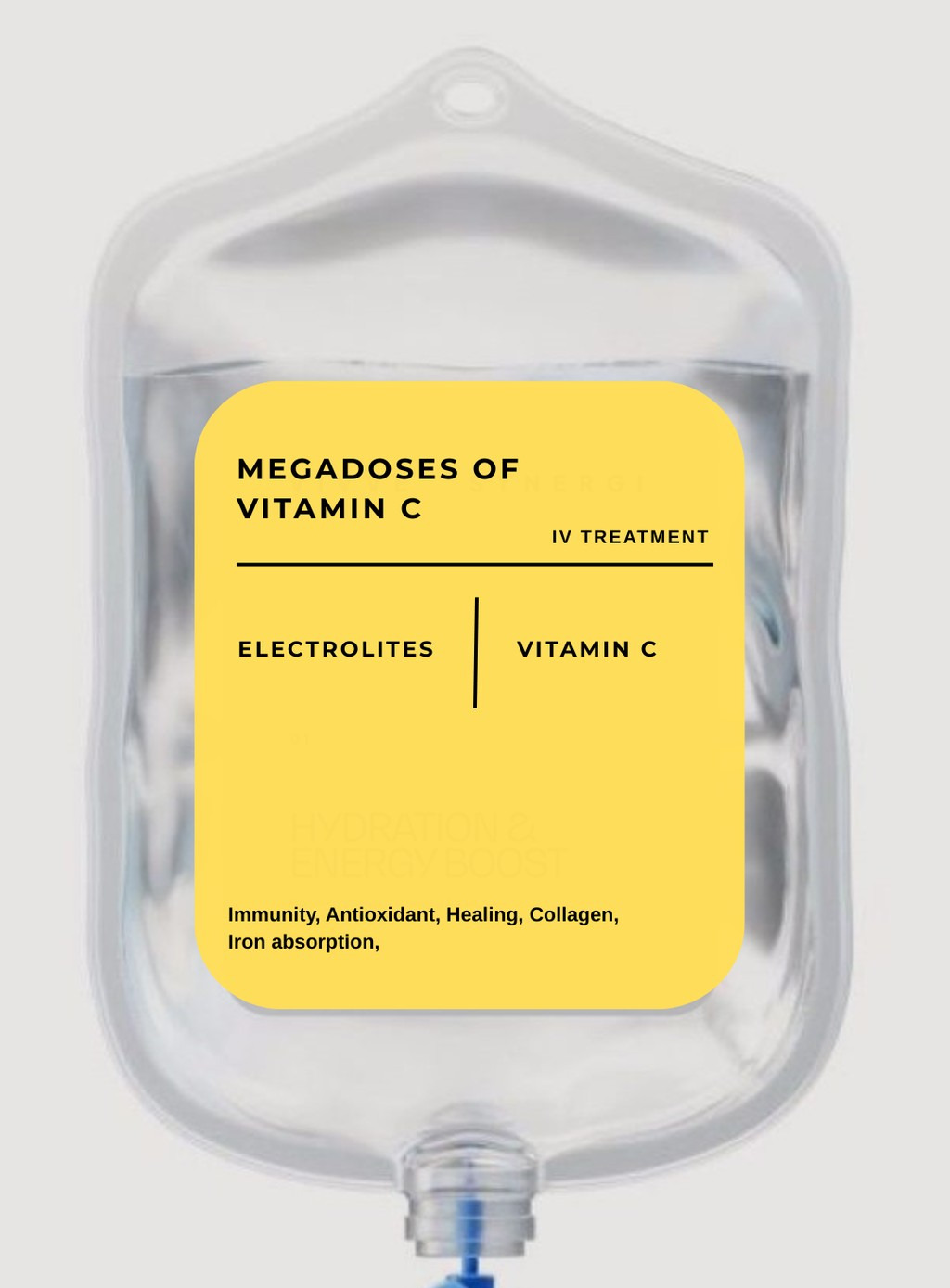
Mega-dose vitamin C has few well-established clinical benefits, and the proven effects are modest; most of the promising data are investigational and depend heavily on route of administration. The single most important distinction is oral versus intravenous. Oral intake is capped by saturable intestinal absorption, so even 3–4 g/day cannot push plasma levels much above ~200 µmol/L, whereas IV infusion bypasses this control and reaches millimolar (10–30 mmol/L) concentrations that behave pharmacologically like a drug rather than a vitamin.[1][2][3] Most of the "megadose" claims (sepsis, cancer) hinge on levels only achievable intravenously.
Where evidence supports a real, if small, benefit
Common cold (oral, regular supplementation):
Regular daily supplementation (≥1 g/day) does not prevent colds in the general population but consistently shortens duration — about 8% in adults and 14% in children — with a dose relationship (6 g/day roughly doubled the benefit vs 3 g/day). A 2023 meta-analysis found supplementation reduced overall cold severity by ~15%, with a 26% reduction specifically in the duration of severe symptoms. Importantly, therapeutic dosing started only after symptom onset has largely been negative in pooled trials (~3% non-significant reduction).[4][5]
Cancer (IV, adjunctive/supportive):
The strongest signal is for supportive care rather than cure. Systematic reviews and phase I/II data suggest high-dose IV vitamin C is well tolerated and may improve quality of life and reduce chemotherapy-associated toxicities (fatigue, nausea, insomnia) without impairing chemotherapy efficacy. A direct antitumor effect remains unproven: the phase 3 VITALITY trial in metastatic colorectal cancer found no PFS or OS benefit overall, though a prespecified subgroup with RAS mutations did benefit. Mechanistically, KRAS/BRAF-mutated tumors appear most sensitive. It should be considered investigational, not standard therapy.[6][7][2][8][9][10][11]
Where high-quality evidence is negative or does not support use
Sepsis/septic shock:
Despite strong biological rationale, the phase 3 LOVIT trial of high-dose IV vitamin C (200 mg/kg/day) found no benefit and a signal toward increased death or persistent organ dysfunction at 28 days. The Surviving Sepsis Campaign issues a weak recommendation against vitamin C in sepsis.[12][13][14]
COVID-19:
Observational and small studies suggested faster recovery and reduced inflammatory markers with IV vitamin C, but the evidence is low-certainty and not practice-changing.[15][16]
Cardiovascular disease/general prevention:
An umbrella review found dietary vitamin C intake associated with lower all-cause mortality and cardiovascular and several cancer risks, but explicitly cautioned against routine supplements, and identified harmful associations (kidney stones, and breast cancer) with supplement use.[17]
Safety considerations that matter at high doses
G6PD deficiency: High-dose (even ~30 g) IV vitamin C can precipitate acute hemolytic anemia and methemoglobinemia — screen G6PD status before IV megadosing.[18][19]
Oxalate nephropathy and calcium oxalate kidney stones: Vitamin C is metabolized to oxalate; cases of oxalate nephropathy are reported, and risk is higher in renal impairment.[19][1][20]
Iron overload/hemochromatosis: Risk of paradoxical pro-oxidant effect via Fenton chemistry.[1]
GI effects: Oral doses above ~2 g/day cause diarrhea, cramping, and flatulence (the basis of the tolerable upper limit). Beyond these specific populations, IV high-dose vitamin C has not shown consistently more harm than placebo in blinded RCTs.[21][20][19]
The differential effect of vitamin C on severe versus mild cold symptoms is well illustrated in the following meta-analysis forest plot, showing a significant 26% reduction in severe symptom duration but no effect on overall (mild) duration.
Overall, "mega-dosing" beyond correcting deficiency yields modest, real benefits for cold severity/duration with regular oral use, and a plausible supportive (quality-of-life/toxicity-reduction) role for IV administration in oncology, but it is not established therapy for sepsis, COVID-19, or cancer cure, and carries specific risks in G6PD-deficient and renally impaired patients.
References
- Making sense of early high-dose intravenous vitamin C in ischemia/reperfusion injury. Spoelstra-de Man AME, Elbers PWG, Oudemans-van Straaten HM. Critical Care (London, England). 2018;22(1):70. doi:10.1186/s13054-018-1996-y.
- Targeting cancer vulnerabilities with high-dose vitamin C. Ngo B, Van Riper JM, Cantley LC, Yun J. Nature Reviews. Cancer. 2019;19(5):271-282. doi:10.1038/s41568-019-0135-7.
- Could vitamin C be a useful adjunct to chemotherapy?. Killock D. Nature Reviews. Clinical Oncology. 2014;11(4):180. doi:10.1038/nrclinonc.2014.34.
- Vitamin C for Preventing and Treating the Common Cold. Hemilä H, Chalker E. The Cochrane Database of Systematic Reviews. 2013;(1):CD000980. doi:10.1002/14651858.CD000980.pub4.
- Vitamin C reduces the severity of common colds: a meta-analysis. Hemilä H, Chalker E. BMC Public Health. 2023;23(1):2468. doi:10.1186/s12889-023-17229-8.
- Intravenous Vitamin C and Cancer: A Systematic Review. Fritz H, Flower G, Weeks L, et al. Integrative Cancer Therapies. 2014;13(4):280-300. doi:10.1177/1534735414534463.
- Vitamin C as an Adjunctive Therapy in Cancer: A Systematic Review and Meta-Analysis of Outcomes in Solid and Hematologic Malignancies. Shahzad M, Amin MK, Javed HMH, et al. American Journal of Clinical Oncology. 2026;:00000421-990000000-00428. doi:10.1097/COC.0000000000001353.
- A Randomized, Open-Label, Multicenter, Phase 3 Study of High-Dose Vitamin C Plus FOLFOX ± Bevacizumab Versus FOLFOX ± Bevacizumab in Unresectable Untreated Metastatic Colorectal Cancer (VITALITY Study). Wang F, He MM, Xiao J, et al. Clinical Cancer Research : An Official Journal of the American Association for Cancer Research. 2022;28(19):4232-4239. doi:10.1158/1078-0432.CCR-22-0655.
- Vitamin C in the Treatment of Colorectal Cancer: Between Hope and Despair. Wasmer M, Weber M, Faes S. Cancers. 2026;18(4):654. doi:10.3390/cancers18040654.
- High-Dose Vitamin C as a Targeted Treatment for KRAS-driven Cancers?. Mack E, Rau C, Otet C, et al. Redox Biology. 2025;85:103726. doi:10.1016/j.redox.2025.103726.
- Harnessing Vitamin C: Unveiling Its Potential in Cancer Prevention and Treatment. Roy A, Maiti DK, Banik BK. Current Medicinal Chemistry. 2025;:CMC-EPUB-150530. doi:10.2174/0109298673411854250808061949.
- Intravenous Vitamin C in Adults with Sepsis in the Intensive Care Unit. Lamontagne F, Masse MH, Menard J, et al. The New England Journal of Medicine. 2022;386(25):2387-2398. doi:10.1056/NEJMoa2200644.
- Monotherapy or combinations? Intravenous vitamin C in sepsis and septic shock: An umbrella review of 31 systematic reviews. Vera-Ponce VJ, Ballena-Caicedo J, Valladolid-Sandoval LAM, et al. PloS One. 2026;21(7):e0351072. doi:10.1371/journal.pone.0351072.
- Surviving Sepsis Campaign: International Guidelines for Management of Sepsis and Septic Shock 2021. Evans L, Rhodes A, Alhazzani W, et al. Critical Care Medicine. 2021;49(11):e1063-e1143. doi:10.1097/CCM.0000000000005337.
- Oxidative Stress and Hyper-Inflammation as Major Drivers of Severe COVID-19 and Long COVID: Implications for the Benefit of High-Dose Intravenous Vitamin C. Vollbracht C, Kraft K. Frontiers in Pharmacology. 2022;13:899198. doi:10.3389/fphar.2022.899198.
- Safety and effectiveness of high-dose vitamin C in patients with COVID-19: a randomized open-label clinical trial. JamaliMoghadamSiahkali S, Zarezade B, Koolaji S, et al. European Journal of Medical Research. 2021;26(1):20. doi:10.1186/s40001-021-00490-1.
- Vitamin C Intake and Multiple Health Outcomes: An Umbrella Review of Systematic Reviews and Meta-Analyses. Xu K, Peng R, Zou Y, et al. International Journal of Food Sciences and Nutrition. 2022;73(5):588-599. doi:10.1080/09637486.2022.2048359.
- High Dose Vitamin C Induced Methemoglobinemia and Hemolytic Anemia in Glucose-6-Phosphate Dehydrogenase Deficiency. Lo YH, Mok KL. The American Journal of Emergency Medicine. 2020;38(11):2488.e3-2488.e5. doi:10.1016/j.ajem.2020.05.099.
- Harm of IV High-Dose Vitamin C Therapy in Adult Patients: A Scoping Review. Yanase F, Fujii T, Naorungroj T, et al. Critical Care Medicine. 2020;48(7):e620-e628. doi:10.1097/CCM.0000000000004396.
- Vitamin C Requirements in Parenteral Nutrition. Berger MM. Gastroenterology. 2009;137(5 Suppl):S70-8. doi:10.1053/j.gastro.2009.08.012.
- Vitamin C Supplementation for the Primary Prevention of Cardiovascular Disease. Al-Khudairy L, Flowers N, Wheelhouse R, et al. The Cochrane Database of Systematic Reviews. 2017;3:CD011114. doi:10.1002/14651858.CD011114.pub2.
'의학공부' 카테고리의 다른 글
| 달리기, 많이 하면 연골 닳는가? (0) | 2026.09.17 |
|---|---|
| 과민성대장증후군, 저FODMAP 다이어트는 어떻게 할까? (0) | 2026.09.17 |
| 근이완제, 근합성을 방해하나요? (0) | 2026.09.06 |
| 운동 후 근육통, 근비대의 조짐일까? (1) | 2026.09.06 |
| 내장지방과 허벅지 살, 둘 중에 건강에 좋은 건 뭘까? (0) | 2026.09.05 |


