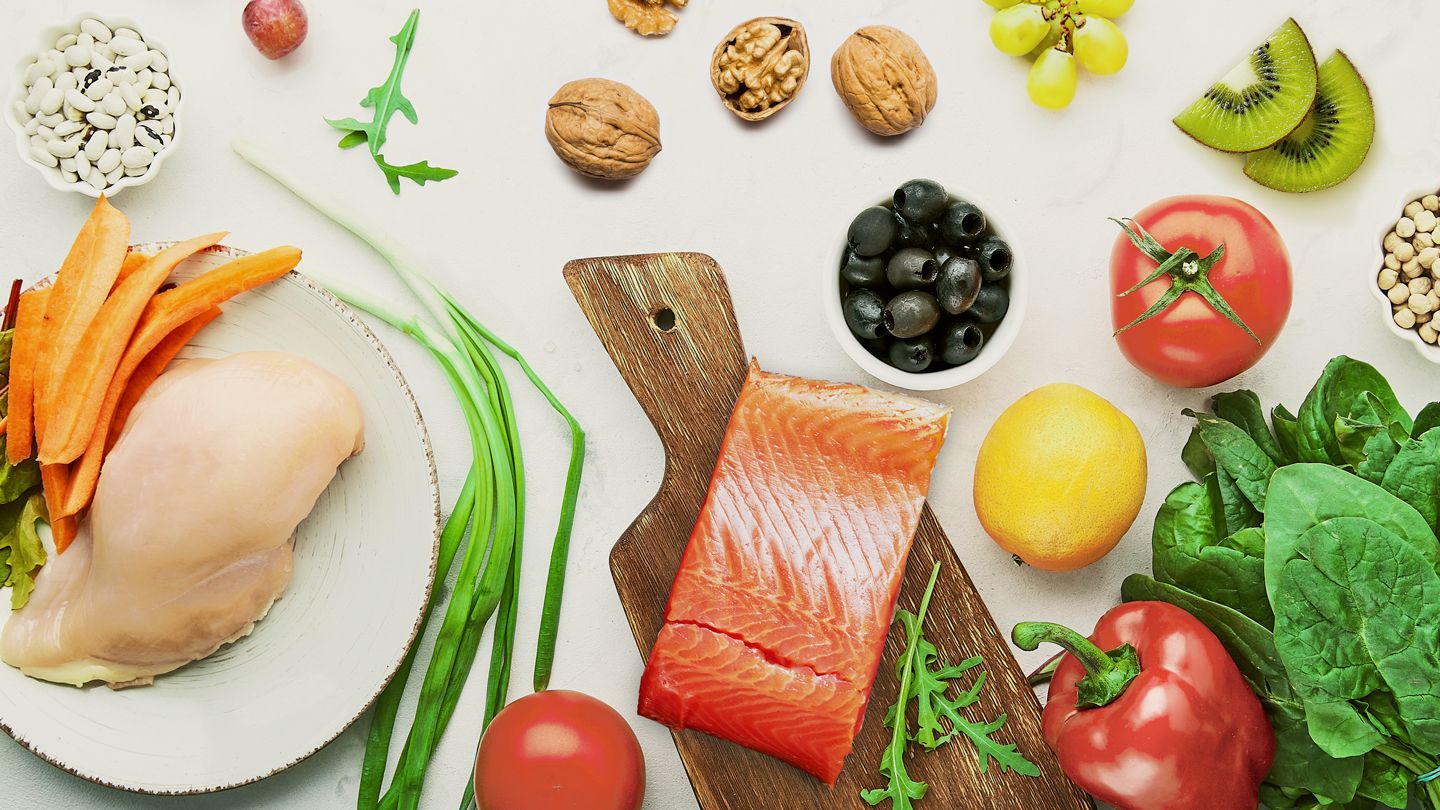
The low FODMAP diet restricts fermentable carbohydrates that are poorly absorbed and rapidly fermented in the colon, producing gas, osmotic water shifts, and luminal distension that trigger symptoms in patients with irritable bowel syndrome (IBS).[1][2][3] It is not a single restrictive diet but a three-phase process — restriction, reintroduction, and personalization — and treating it as only the first phase is a common implementation error.[1][4][2][5]
Phase 1 – Restriction: All FODMAP groups (fructans/GOS in wheat, rye, legumes, onion, garlic; lactose; excess fructose; polyols like sorbitol and mannitol) are eliminated for roughly 2–6 weeks (guidance ranges from 4–8 weeks).[1][4][3][6] This phase functions as a diagnostic test — if symptoms haven't improved within that window, FODMAP restriction should be discontinued and another IBS treatment pursued rather than continuing indefinitely.[4][5]
Phase 2 – Reintroduction: Individual FODMAP subgroups are systematically challenged, typically with increasing quantities over a 3-day period per subgroup, while the overall low-FODMAP baseline is maintained, to identify specific triggers and thresholds. Fructans, mannitol, and galacto-oligosaccharides are the most common recurrent symptom triggers identified in reintroduction trials.[4][6][5]
Phase 3 – Personalization: Tolerated FODMAPs are liberalized back into the diet to maximize variety while keeping symptom-triggering foods below the individual's threshold, for long-term sustainable use.[1][4][5] Up to 76% of responders can eventually liberalize their diet after completing reintroduction.[4]
Considerations specific to a young male patient (or any patient) starting this diet:
- Diagnostic clarity first — confirm an IBS diagnosis (or another disorder of gut-brain interaction) and rule out red flags before committing to an elimination diet, since the diet is symptom-based rather than curative.[2]
- Dietitian-led implementation is strongly preferred. Trials show dietitian guidance significantly improves adherence to reintroduction and personalization phases, which are the phases most often abandoned or poorly executed when patients self-manage.[2][5][7]
- Avoid prolonged strict restriction. Chronic phase 1 restriction (skipping reintroduction) risks micronutrient deficiencies and reduction of beneficial gut microbiota/short-chain fatty acid production — relevant for an active young male with potentially higher caloric and nutrient needs.[2][8]
- Set expectations and a clear timeline — response should be assessed within 2–6 weeks; nonresponders should not remain on the restrictive phase but should transition to alternative IBS therapy.[4][5]
- Consider patient lifestyle and preference — practical barriers (eating out, food preparation, social eating) can affect adherence; a "bottom-up" (restrict a few known trigger foods) versus "top-down" (full strict elimination) approach can be individualized based on the patient's dietary patterns and fructan/other intake.[9]
The following figure outlines a UK consensus framework for individualizing dietary therapy choice (traditional dietary advice, gluten-free diet, or low FODMAP diet) through joint patient-dietitian consultation, which is directly relevant to tailoring the approach for this patient.
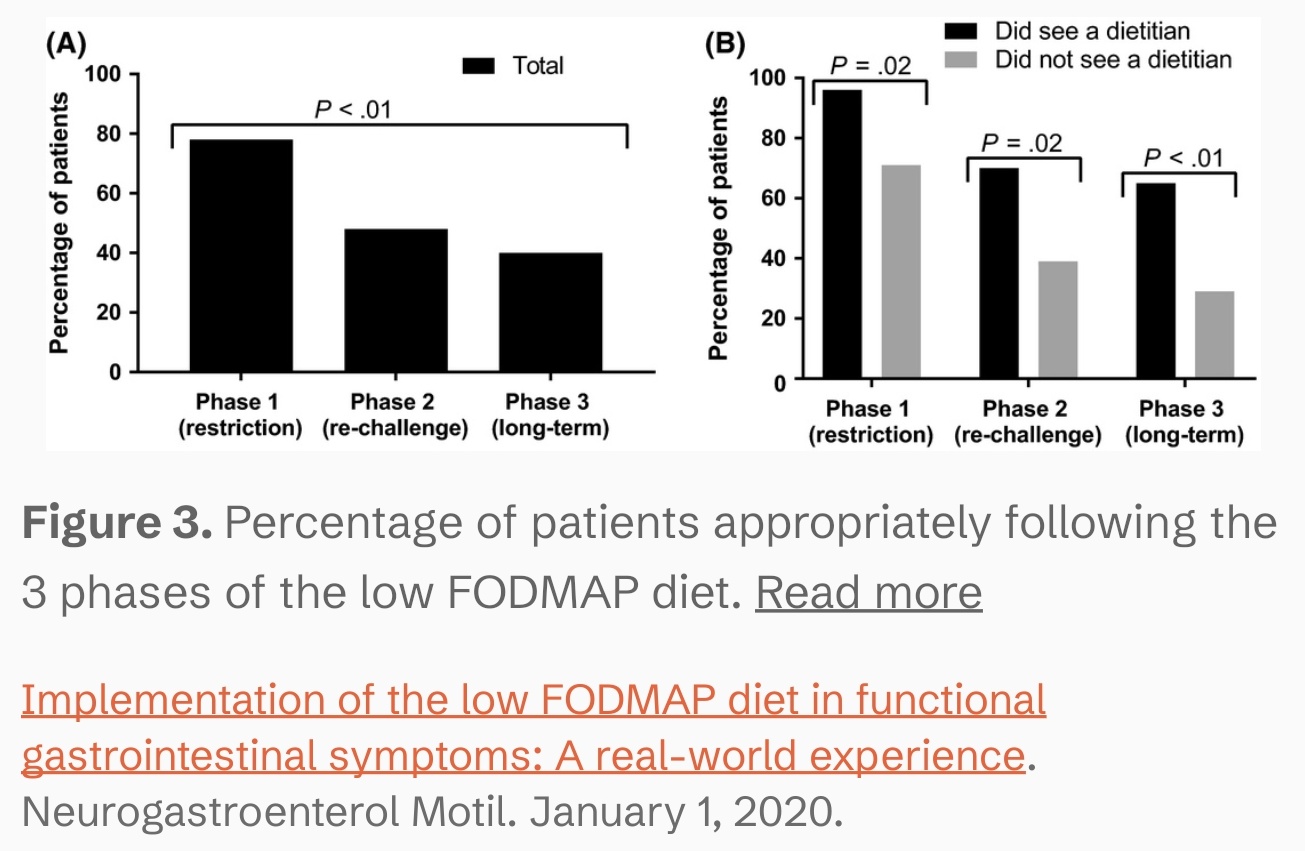
Adherence to each phase also drops off progressively without dietitian support, reinforcing the value of structured follow-up through reintroduction and personalization rather than leaving the patient on prolonged strict restriction.
References
- Low FODMAP diet for treatment of irritable bowel syndrome. Edward Young, Laura S Rojas Vasquez, Amanda Lim, et al. Cochrane Database of Systematic Reviews. 2022. doi:10.1002/14651858.CD014029.
- ACG Clinical Guideline: Management of Irritable Bowel Syndrome. Lacy BE, Pimentel M, Brenner DM, et al. The American Journal of Gastroenterology. 2021;116(1):17-44. doi:10.14309/ajg.0000000000001036.
- The role of diet in irritable bowel syndrome: implications for dietary advice. Rej A, Aziz I, Tornblom H, Sanders DS, Simrén M. Journal of Internal Medicine. 2019;286(5):490-502. doi:10.1111/joim.12966.
- AGA Clinical Practice Update on the Role of Diet in Irritable Bowel Syndrome: Expert Review. Chey WD, Hashash JG, Manning L, Chang L. Gastroenterology. 2022;162(6):1737-1745.e5. doi:10.1053/j.gastro.2021.12.248.
- Behavioral and Diet Therapies in Integrated Care for Patients With Irritable Bowel Syndrome. Chey WD, Keefer L, Whelan K, Gibson PR. Gastroenterology. 2021;160(1):47-62. doi:10.1053/j.gastro.2020.06.099.
- Review article: exclude or expose? The paradox of conceptually opposite treatments for irritable bowel syndrome. Biesiekierski JR, Manning LP, Murray HB, et al. Alimentary Pharmacology & Therapeutics. 2022;56(4):592-605. doi:10.1111/apt.17111.
- Implementation of the low FODMAP diet in functional gastrointestinal symptoms: A real‐world experience. Tuck CJ, Reed DE, Muir JG, Vanner SJ. Neurogastroenterology and Motility. 2020;32(1):e13730. doi:10.1111/nmo.13730.
- The Intestinal Microenvironment and Disorders of Gut-Brain Interaction. Grover M, Barbara G, Chey W, et al. Gastroenterology. 2026;170(6):1133-1151. doi:10.1053/j.gastro.2026.02.015.
- Diet and irritable bowel syndrome: an update from a UK consensus meeting. Rej A, Avery A, Aziz I, et al. BMC Medicine. 2022;20(1):287. doi:10.1186/s12916-022-02496-w.
The low FODMAP diet functions as a genuine therapeutic intervention during phase 1 (symptom reduction via decreased osmotic load and colonic fermentation) and simultaneously serves as a diagnostic tool to identify individual triggers during phases 2–3. It is not purely detective work.
The restriction phase itself produces real symptomatic benefit, not just information — meta-analyses cited by the ACG guideline show a significant reduction in global IBS symptoms with FODMAP restriction versus various comparators (RR 0.69, 95% CI 0.54–0.88), and response rates in the literature range from 40–80%.[1][2][3] So restriction alone is an active treatment, working through reduced luminal water content and gas from bacterial fermentation, producing the distension that drives symptoms in visceral hypersensitivity.[1][2][3][4]
What makes it a "process" rather than a static diet is that phase 1 restriction is only meant to run 2–6 weeks and functions as a diagnostic test of FODMAP sensitivity — if symptoms improve, the patient proceeds to reintroduction; if they don't respond, restriction should be abandoned in favor of another IBS therapy.[5] Reintroduction (phase 2) then identifies which specific FODMAP subgroups are true personal triggers, since not everyone reacts to all of them, and personalization (phase 3) uses that information to build a sustainable, liberalized long-term diet.[6][7][5]
So the full three-phase model has a dual purpose:
- Phase 1 (restriction) — is genuinely therapeutic and also serves as the diagnostic screen for FODMAP sensitivity overall.
- Phases 2–3 (reintroduction/personalization) — identify the specific culprit(s) and convert the diagnostic information into an individualized, less restrictive long-term treatment plan.[6][7][5]
Skipping reintroduction (i.e., staying on strict phase 1 indefinitely) turns it into an unnecessarily prolonged blanket elimination diet, which is discouraged given risks of micronutrient deficiency and adverse effects on commensal microbiota.[1][2][5][8]
The mechanistic diagram below illustrates how FODMAPs generate the osmotic and fermentative effects that produce IBS symptoms, providing the physiological rationale for why restriction itself is therapeutic, not merely diagnostic.
References
- The Intestinal Microenvironment and Disorders of Gut-Brain Interaction. Grover M, Barbara G, Chey W, et al. Gastroenterology. 2026;170(6):1133-1151. doi:10.1053/j.gastro.2026.02.015.
- ACG Clinical Guideline: Management of Irritable Bowel Syndrome. Lacy BE, Pimentel M, Brenner DM, et al. The American Journal of Gastroenterology. 2021;116(1):17-44. doi:10.14309/ajg.0000000000001036.
- The Low FODMAP Diet: Recent Advances in Understanding Its Mechanisms and Efficacy in IBS. Staudacher HM, Whelan K. Gut. 2017;66(8):1517-1527. doi:10.1136/gutjnl-2017-313750.
- Mechanisms and efficacy of dietary FODMAP restriction in IBS. Staudacher HM, Irving PM, Lomer MC, Whelan K. Nature Reviews. Gastroenterology & Hepatology. 2014;11(4):256-66. doi:10.1038/nrgastro.2013.259.
- Behavioral and Diet Therapies in Integrated Care for Patients With Irritable Bowel Syndrome. Chey WD, Keefer L, Whelan K, Gibson PR. Gastroenterology. 2021;160(1):47-62. doi:10.1053/j.gastro.2020.06.099.
- Low FODMAP diet for treatment of irritable bowel syndrome. Edward Young, Laura S Rojas Vasquez, Amanda Lim, et al. Cochrane Database of Systematic Reviews. 2022. doi:10.1002/14651858.CD014029.
- Review article: exclude or expose? The paradox of conceptually opposite treatments for irritable bowel syndrome. Biesiekierski JR, Manning LP, Murray HB, et al. Alimentary Pharmacology & Therapeutics. 2022;56(4):592-605. doi:10.1111/apt.17111.
- Common misconceptions and controversies in the management of irritable bowel syndrome. Black CJ, Olano C, Quigley EMM, Ford AC. Nature Reviews. Gastroenterology & Hepatology. 2025;22(7):517-526. doi:10.1038/s41575-025-01065-9.
How can a physician realistically try a low FODMAP diet to a patient in a restricted state(eg, in the army)?
Realistically, strict phase 1 FODMAP restriction is difficult to enforce when a patient does not control food preparation — but the diet can still be adapted using a simplified, "best-effort" version, structured selection from available menu items, and a compressed timeline, ideally with dietitian input even if only via telehealth.
Key practical considerations for a young male patient in a restricted dining environment (e.g., military mess hall, barracks, deployment):
Menu triage over strict elimination. Since the patient cannot control ingredients or preparation, focus on identifying and avoiding the highest-yield culprits rather than achieving complete FODMAP restriction: wheat/rye-based items (bread, pasta, baked goods), onion/garlic (ubiquitous in sauces and seasoning bases), legumes/beans, high-lactose dairy, and high-FODMAP fruits (apples, pears, watermelon, mango). Swapping toward rice, potatoes, oats, lactose-free dairy or hard cheese, eggs, plain meats/fish, and low-FODMAP produce (carrots, spinach, grapes, oranges, strawberries) when available on a cafeteria line is often feasible even without cooking control.[1][2]
Step-up rather than step-down approach. For patients with limited access to cooking facilities or control over food preparation, a "step-up" strategy — starting by removing only the most obvious/concentrated FODMAP sources (garlic/onion, wheat, lactose) rather than attempting full elimination — is a recognized adaptation, though it has not been formally validated and carries a higher risk of inadequate symptom relief and loss of confidence in the approach if it fails.[2]
A mobile app is more practical than a printed food list in this setting. Since the patient is choosing among fixed menu options, a smartphone food database/app (e.g., Monash University app) with a barcode or search function allows real-time decisions at the serving line, and has shown better engagement and effectiveness than static booklets, even if less effective than direct dietitian counseling.[1][3] The following figure shows real-world data confirming that dietitian-guided patients are far more likely to hit the therapeutic FODMAP threshold than those without a dietitian, which underscores why remote or telehealth dietitian check-ins (even brief, periodic ones) are valuable even when in-person visits aren't feasible.
Remote dietitian support and group education are viable substitutes for onsite one-on-one counseling. Group education sessions (4–12 patients) delivered by a dietitian have shown similar effectiveness to individual counseling at lower cost/resource burden, and telehealth-delivered e-health low FODMAP programs have also shown symptom improvement in unselected IBS patients — both are reasonable options when the dietitian cannot be physically present.[1][4]
Shorten and simplify expectations. Given lower adherence potential, set the trial period at the shorter end (2–4 weeks) and clearly frame it as a diagnostic trial: if there's no meaningful symptom improvement despite reasonable effort, abandon the approach and move to an alternative IBS therapy rather than prolonging an incomplete, poorly controlled restriction that risks nutritional inadequacy without diagnostic benefit.[5][4]
Caution on nutritional adequacy. Full restriction can reduce intake of energy, carbohydrates, thiamine, riboflavin, calcium, and sodium; in a restricted dietary environment where substitution options are limited, this risk is amplified, so completeness of restriction should be balanced against ensuring adequate overall caloric and micronutrient intake for an active-duty patient.[4]
References
- Food Components and Irritable Bowel Syndrome. Gibson PR, Varney J, Malakar S, Muir JG. Gastroenterology. 2015;148(6):1158-74.e4. doi:10.1053/j.gastro.2015.02.005.
- Review article: implementation of a diet low in FODMAPs for patients with irritable bowel syndrome—directions for future research. Mitchell H, Porter J, Gibson PR, Barrett J, Garg M. Alimentary Pharmacology & Therapeutics. 2019;49(2):124-139. doi:10.1111/apt.15079.
- Optimizing educational methods for the low FODMAP diet in disorders of gut–brain interaction: A feasibility randomized controlled trial. Dimidi E, McArthur AJ, White R, Whelan K, Lomer MCE. Neurogastroenterology and Motility. 2023;35(10):e14640. doi:10.1111/nmo.14640.
- Behavioral and Diet Therapies in Integrated Care for Patients With Irritable Bowel Syndrome. Chey WD, Keefer L, Whelan K, Gibson PR. Gastroenterology. 2021;160(1):47-62. doi:10.1053/j.gastro.2020.06.099.
- ACG Clinical Guideline: Management of Irritable Bowel Syndrome. Lacy BE, Pimentel M, Brenner DM, et al. The American Journal of Gastroenterology. 2021;116(1):17-44. doi:10.14309/ajg.0000000000001036.
What alternative IBS treatments should be considered if a patient cannot adhere to or does not respond to a low FODMAP diet trial?
Second-line pharmacotherapy targeted by bowel habit and brain–gut behavioral therapies are the main alternatives when a low FODMAP diet fails or cannot be sustained. Selection depends on predominant symptom (constipation vs diarrhea vs pain) and, per AGA guidance, should follow shared decision-making weighing cost, access, and adverse effects.[1]
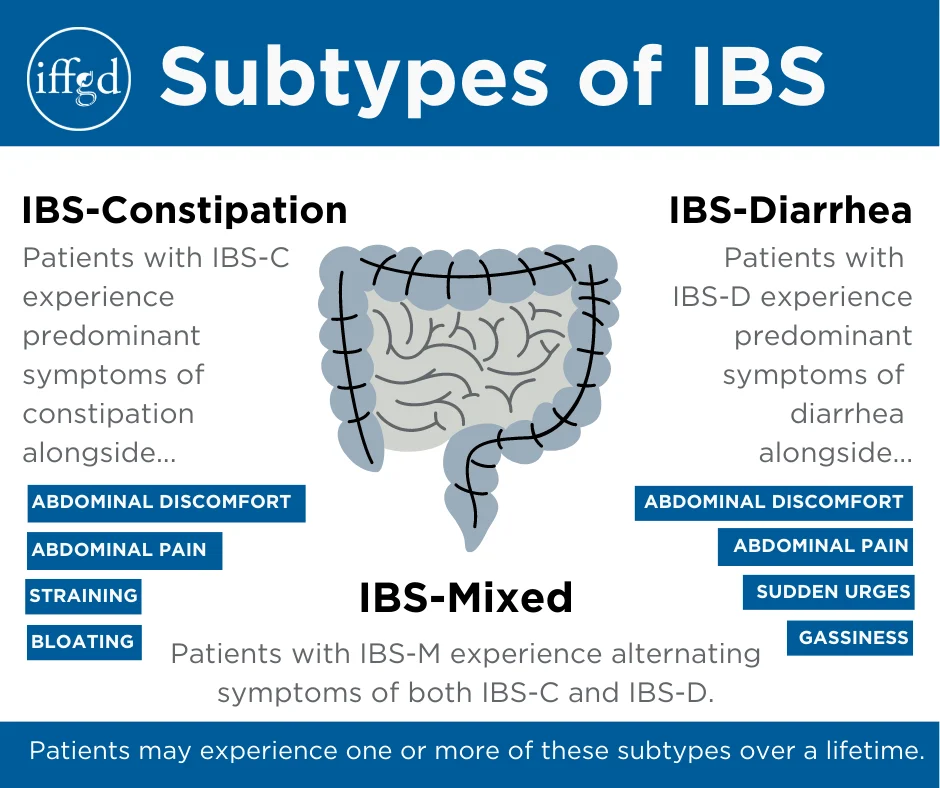
For IBS-C, options include linaclotide (strong recommendation, high-quality evidence), plus lubiprostone, plecanatide, and tenapanor, each supported over placebo; in a network meta-analysis linaclotide ranked first for global symptoms, pain, and stool frequency, while tenapanor ranked first for bloating.[1][2] Tegaserod remains approved for women under 65 without cardiovascular risk factors but was withdrawn from the US market for business reasons, not safety.[3][1][4]
For IBS-D, rifaximin (a 14-day nonabsorbable antibiotic course, repeatable if symptoms recur), eluxadoline, and alosetron are recommended. Alosetron is restricted to women with severe, treatment-refractory IBS-D given risk of colonic ischemia and constipation-related complications (its REMS requirement was removed in 2023 but the risk warning remains); eluxadoline is contraindicated without a gallbladder or with >3 alcoholic drinks/day due to pancreatitis/sphincter of Oddi spasm risk. Network meta-analysis ranked alosetron and ramosetron as most effective for IBS-D/IBS-M, with rifaximin having the best safety profile.[1][5] Loperamide is a reasonable low-cost first-line antidiarrheal though evidence is limited.[4][6]
For persistent abdominal pain across subtypes, tricyclic antidepressants (e.g., amitriptyline, low-dose) are conditionally recommended and ranked highest for pain relief in recent network meta-analysis, followed by antispasmodics and peppermint oil; SNRIs also showed strong efficacy in a 2026 network meta-analysis.[1][4][7] Opioids, including centrally acting agents, are explicitly recommended against for IBS pain given lack of efficacy evidence and elevated risk of opioid-induced hyperalgesia and dependence.[1]
Brain–gut behavioral therapies (BGBTs) are recommended when first- or second-line treatments fail or for refractory pain, and are a natural complement to diet in a restricted setting since they don't depend on food access. Self-administered or minimal-contact CBT and face-to-face gut-directed hypnotherapy have the strongest evidence; telephone-based CBT and group hypnotherapy are also effective, which may suit a resource-limited or deployed setting.[8][9][2][10]
The following table from a NEJM review summarizes efficacy, evidence quality, side effects, and cost across these options, which may help frame a stepwise discussion with the patient.
References
- AGA Institute Quality Indicator Development for Irritable Bowel Syndrome. Hung KW, Leiman DA, Kaza A, et al. Gastroenterology. 2025;168(3):612-622.e4. doi:10.1053/j.gastro.2024.11.003.
- Irritable Bowel Syndrome. Ford AC, Sperber AD, Corsetti M, Camilleri M. Lancet (London, England). 2020;396(10263):1675-1688. doi:10.1016/S0140-6736(20)31548-8.
- FDA Orange Book. FDA Orange Book.
- Irritable Bowel Syndrome: Treatment Based on Pathophysiology and Biomarkers. Camilleri M, Boeckxstaens G. Gut. 2023;72(3):590-599. doi:10.1136/gutjnl-2022-328515.
- Efficacy of Pharmacological Therapies in Patients With IBS With Diarrhoea or Mixed Stool Pattern: Systematic Review and Network Meta-Analysis. Black CJ, Burr NE, Camilleri M, et al. Gut. 2020;69(1):74-82. doi:10.1136/gutjnl-2018-318160.
- Irritable Bowel Syndrome. Ford AC, Lacy BE, Talley NJ. The New England Journal of Medicine. 2017;376(26):2566-2578. doi:10.1056/NEJMra1607547.
- Efficacy of Gut-Brain Neuromodulators and Brain-Gut Behaviour Therapies for Irritable Bowel Syndrome: Systematic Review and Network Meta-Analysis. Khasawneh M, Thakur ER, Goodoory VC, et al. Gut. 2026;:gutjnl-2026-339311. doi:10.1136/gutjnl-2026-339311.
- Non-Pharmaceutical Treatments for Irritable Bowel Syndrome. Wang XJ, Thakur E, Shapiro J. BMJ (Clinical Research Ed.). 2024;387:e075777. doi:10.1136/bmj-2023-075777.
- Common misconceptions and controversies in the management of irritable bowel syndrome. Black CJ, Olano C, Quigley EMM, Ford AC. Nature Reviews. Gastroenterology & Hepatology. 2025;22(7):517-526. doi:10.1038/s41575-025-01065-9.
- Effect of Brain-Gut Behavioral Treatments on Abdominal Pain in Irritable Bowel Syndrome: Systematic Review and Network Meta-Analysis. Goodoory VC, Khasawneh M, Thakur ER, et al. Gastroenterology. 2024;167(5):934-943.e5. doi:10.1053/j.gastro.2024.05.010.
'의학공부' 카테고리의 다른 글
| 먹고 누우면 살 찐다는 말, 정말일까? (0) | 2026.09.20 |
|---|---|
| 달리기, 많이 하면 연골 닳는가? (0) | 2026.09.17 |
| 비타민C 메가도즈, 어디에 효과가 있을까? (0) | 2026.09.14 |
| 근이완제, 근합성을 방해하나요? (0) | 2026.09.06 |
| 운동 후 근육통, 근비대의 조짐일까? (1) | 2026.09.06 |


